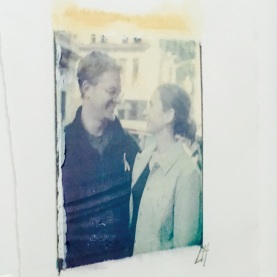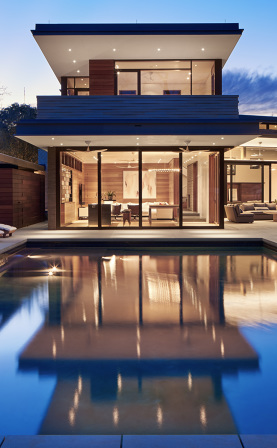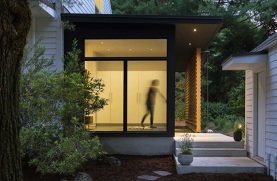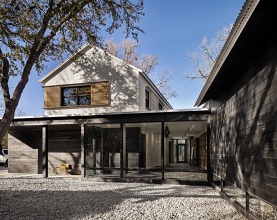

So often we focus on what buildings and spaces look like. Sexy professional photographs grab our attention, we evaluate whether we like what we see or not and move on. But our relationship with the buildings we live in and use every day is hardly that superficial. The things that make us love certain places and spaces in our lives are so much more complex than their appearance. The things we love are the things that interact with all of our senses and bodies in countless combinations and that, in the end, amount to feelings and memories of the body and the mind.
The home is unique in that it is universally familiar and yet individually distinct. It is a place where our senses and bodies are activated and used to understand and use its space. The scale of the home puts us in close proximity to the things around us allowing us to see and feel the spaces differently than in other settings. Our vision sense is altered by this scale and becomes less dominant as other senses such as sound and smell come into play. The ability to visually observe and understand the whole is replaced by sequences of partial views, peripheral vision and changing vantage points. As a result, one can only understand and know a home through a combination of movement, lived experience and memory.
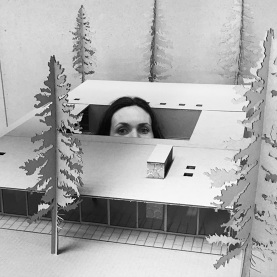
Aamodt / Plumb was invited to teach a graduate-level architecture studio at Roger Williams University in the Spring 2016. The studio will focus on designing the experience and atmosphere of a home. We will explore how the senses can be used as primary design mechanisms and develop physical tools and means of representation to test our ideas. A fundamental end result of the studio will be for each student to design and build an immersive device that convincingly conveys a primary experience of the design.
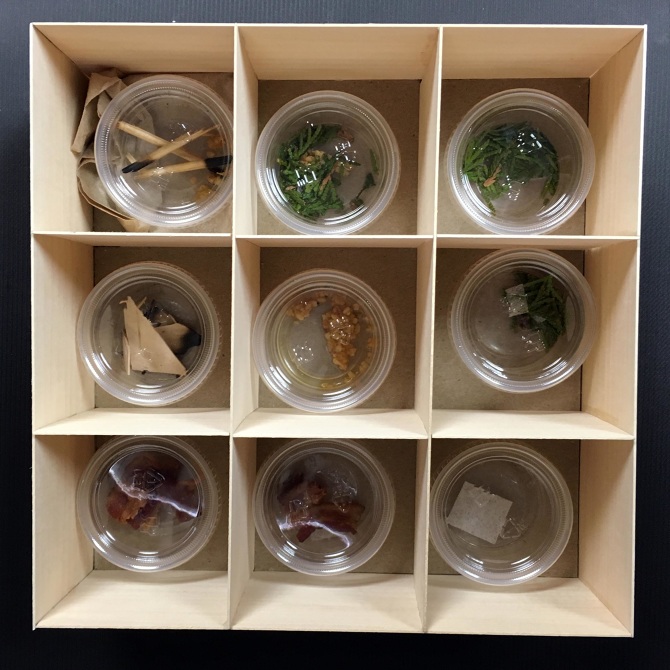
Image:
Experiential Device by Taylor Chin, Roger Williams University MArch Program. The device represents the "scent plan" of The Evans House by James Evans, 1961, New Canaan CT. The nine square grid contains smells for each area of the house as experienced by the student. The house has an open floor plan so the device also maps where smells are singular, like the pine needles from the forest at the perimeter, and others are blended like the smoke of the fireplace and garlic cooking oil of the kitchen.
* * *
The following texts explore ideas about phenomenology, the senses, the home and beauty:
Pallasmaa, J. (1996). The Eyes of the Skin: Architecture and the senses. London: Academy Editions.
Bachelard, G., Jolas, M., & Stilgoe, J. R. (n.d.). The Poetics of Space.
Rybczynski, W. (1986). Home: A Short History of an Idea. New York, NY, U.S.A.: Viking.
Tanizaki, J. (1977). In Praise of Shadows. New Haven, CT: Leete’s Island Books.
Koren, L. (n.d.). Wabi-sabi for Artists, Designers, Poets, and Philosophers.