
The memorial, entitled Banners of Reflection, encourages passersby to pause and recognize the events that occurred at the site of the Triangle Shirtwaist Factory Fire by creating a dynamic and ever-changing intervention that activates the existing façade of the Brown Building and reflects the ambient conditions of the surrounding urban context.
link to project pinterest board
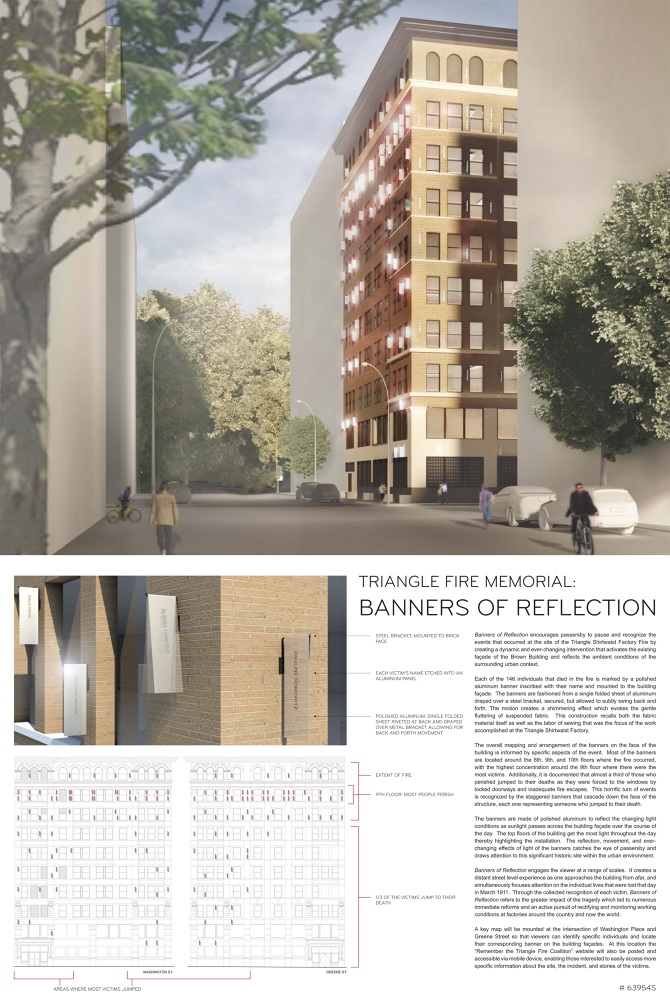
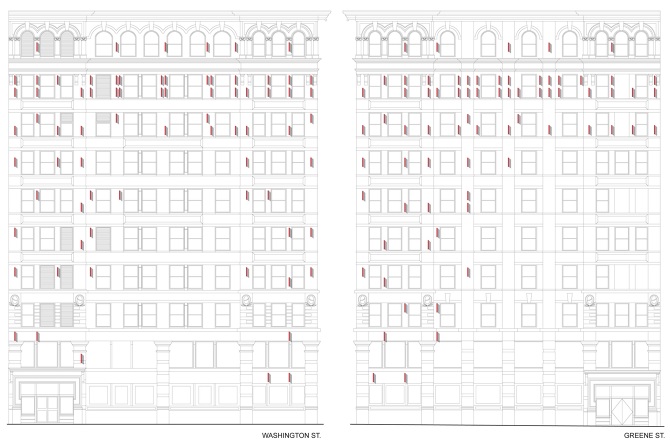
Each of the 146 individuals that died in the fire is marked by a polished aluminum banner inscribed with their name and mounted to the building façade. The banners are fashioned from a single folded sheet of aluminum draped over a steel bracket, secured, but allowed to subtly swing back and forth. The motion creates a shimmering effect which evokes the gentle fluttering of suspended fabric. This construction recalls both the fabric material itself as well as the labor of sewing that was the focus of the work accomplished at the Triangle Shirtwaist Factory.
The overall mapping and arrangement of the banners on the face of the building is informed by specific aspects of the event. Most of the banners are located around the 8th, 9th, and 10th floors where the fire occurred, with the highest concentration around the 9th floor where there were the most victims. Additionally, it is documented that almost a third of those who perished jumped to their deaths as they were forced to the windows by locked doorways and inadequate fire escapes. This horrific turn of events is recognized by the staggered banners that cascade down the face of the structure, each one representing someone who jumped to their death.
The banners are made of polished aluminum to reflect the changing light conditions as sunlight passes across the building façade over the course of the day. The top floors of the building get the most light throughout the day thereby highlighting the installation. The reflection, movement, and ever-changing effects of light of the banners catches the eye of passersby and draws attention to this significant historic site within the urban environment.
Banners of Reflection engages the viewer at a range of scales. It creates a distant street level experience as one approaches the building from afar, and simultaneously focuses attention on the individual lives that were lost that day in March 1911. Through the collected recognition of each victim, Banners of Reflection refers to the greater impact of the tragedy which led to numerous immediate reforms and an active pursuit of rectifying and monitoring working conditions at factories around the country and now the world.